
Unroasted chickpea flour
Food, Plant source foods, Flours, Chickpea flour
Consumption area(s): Afghanistan 🇦🇫, Albania 🇦🇱, Algeria 🇩🇿, Armenia 🇦🇲, Australia 🇦🇺, Azerbaijan 🇦🇿, Bangladesh 🇧🇩, Bosnia and Herzegovina 🇧🇦, Bulgaria 🇧🇬, Cameroon 🇨🇲, Canada 🇨🇦, China 🇨🇳, Colombia 🇨🇴, Croatia 🇭🇷, Cyprus 🇨🇾, Czech Republic 🇨🇿, Egypt 🇪🇬, Ethiopia 🇪🇹, France 🇫🇷, Georgia 🇬🇪, Germany 🇩🇪, Greece 🇬🇷, India 🇮🇳, Indonesia 🇮🇩, Iran 🇮🇷, Iraq 🇮🇶, Italy 🇮🇹, Jordan 🇯🇴, Lebanon 🇱🇧, Libya 🇱🇾, Malaysia 🇲🇾, Malta 🇲🇹, Morocco 🇲🇦, Myanmar 🇲🇲, Nepal 🇳🇵, Netherlands 🇳🇱, Nigeria 🇳🇬, Pakistan 🇵🇰, Palestine 🇵🇸, Poland 🇵🇱, Portugal 🇵🇹, Romania 🇷🇴, Russia 🇷🇺, Saudi Arabia 🇸🇦, Senegal 🇸🇳, Serbia 🇷🇸, Slovenia 🇸🇮, Spain 🇪🇸, Sri Lanka 🇱🇰, Syria 🇸🇾, Tunisia 🇹🇳, Turkey 🇹🇷, Ukraine 🇺🇦, United Arab Emirates 🇦🇪, United Kingdom 🇬🇧, United States 🇺🇸, Vietnam 🇻🇳
Introduction
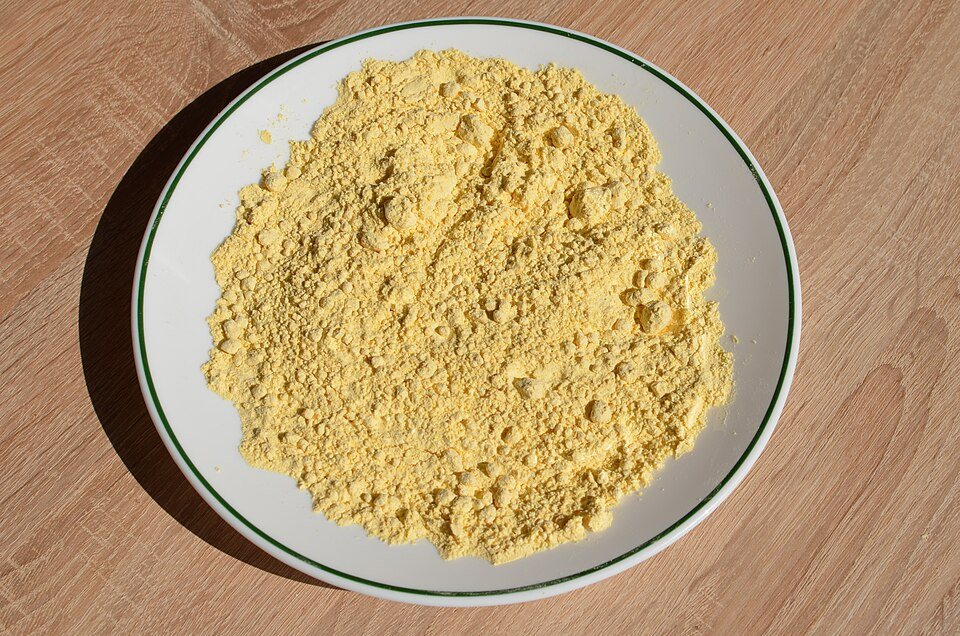
Unroasted chickpea flour is a finely ground legume-based powder obtained from unroasted chickpeas that are processed without prior heat treatment. This form is often distinguished from roasted variants due to its milder sensory profile and its broader applicability in both traditional and industrial food systems. In various culinary contexts, it may also be described as raw chickpea flour, particularly when contrasted with heat-processed alternatives. Unlike roasted versions, non-toasted chickpea flour typically exhibits a lighter color, softer aroma, and more neutral taste, which makes it suitable for formulations where flavor neutrality is desirable.
Uses of unroasted chickpea flour
In the Indian state of Andhra Pradesh, a traditional preparation known as senaga pindi kura makes use of a batter derived from unroasted chickpea flour, which is shaped into dumplings or soft cakes and cooked within a spiced curry base. This dish is commonly consumed alongside staple breads such as chapati or puri and is particularly associated with seasonal winter breakfasts. Another widespread application of the same ingredient is chilla, a savory griddle-cooked preparation formed from a liquid batter of chickpea flour, widely prepared in household cooking and informal street-food settings across India.
In Myanmar, chickpea flour, locally referred to as pe hmont, is integrated into several everyday culinary practices. In its non-heat-treated form, it is essential in the production of Burmese tofu, where a hydrated slurry is coagulated to obtain a firm, sliceable matrix. Beyond this structural function, it is also employed in liquid preparations as a thickening agent, contributing viscosity and body to soups such as mohinga and ohn no khao swè, without significantly altering their flavor profile. A related application is found in Yunnan cuisine in the dish jidou liangfen, where chickpea-based gels are formed into chilled, noodle-like blocks and served cold with sauces and aromatics.
Across Southern Europe, chickpea flour in its raw, unroasted form is traditionally used to produce flat, oven-set preparations characterized by a dense yet tender internal structure. Along the Ligurian coast and surrounding regions, this technique gives rise to preparations such as farinata, fainâ, calda, and, in southern France, socca or cade, all based on a simple mixture of chickpea flour and water baked at high temperature. In Sicily and parts of southern France, the same unroasted flour is used to produce panelle and panisses, where a cooked paste is allowed to set into a firm mass before being sliced and fried.
In Spanish cuisine, chickpea flour is used in preparations such as tortillitas de camarones, where it acts primarily as a binding and texturizing agent in fried batters. In the eastern Mediterranean, particularly in Cyprus and Greece, it is also incorporated into koliva, a ritual preparation made from boiled grains and sweetened components, where chickpea flour contributes to cohesion and structural stability within the mixture.
In North Africa, especially in Algeria and eastern Morocco, chickpea flour is used in the preparation of karantika (also known as garantita), a baked dish formed from a liquid mixture of unroasted chickpea flour and water, which sets during cooking into a soft, custard-like structure. The finished product is typically consumed hot and cut into portions, and its name is commonly traced to a linguistic adaptation of the Spanish term calentica, meaning “hot preparation.”
Nutritional facts table
Please note that nutritional values may vary slightly depending on the chickpeas used.
| Nutrients | Per 100 g |
| Calories (kcal) | 374 |
| Total fat (g) | 6 |
| ———Saturated fat (g) | 1 |
| Cholesterol (mg) | 0 |
| Sodium (mg) | 7 |
| Total carbohydrates (g) | 58 |
| ———Dietary fiber (g) | 11 |
| ———Total sugar (g) | 11 |
| Protein (g) | 22 |
Recipes that use this product as an ingredient:

Source(s):
https://es.wikipedia.org/wiki/Harina_de_garbanzo
https://en.wikipedia.org/wiki/Gram_flour
Photo(s):
1. AlexanderVanLoon, CC BY-SA 3.0 https://creativecommons.org/licenses/by-sa/3.0, via Wikimedia Commons