
Ponte Buggianese
Municipality in the province of Pistoia
Earth, Europe, Italy, Tuscany, Province of Pistoia
Introduction
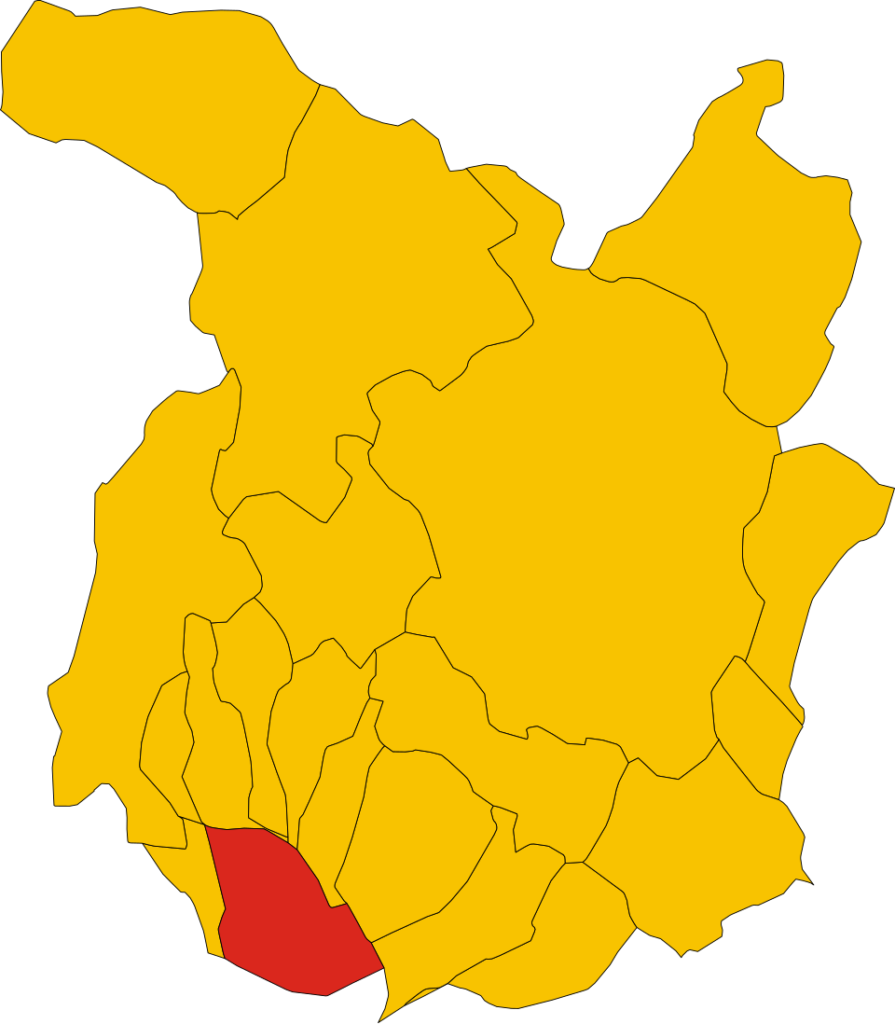
Ponte Buggianese is an Italian municipality located in the province of Pistoia, within the region of Tuscany. Its territory lies in the southern portion of the Valdinievole, extending into the south-eastern sector where a large part of the Fucecchio Marsh is found. This wetland area is characterized by multiple watercourses, including the Pescia di Pescia, which also flows through the town center before reaching the marsh.
The local hydrological system converges in this marshland, from which waters are later drained by the Usciana River, a tributary of the Arno. The entire municipal area is flat, with elevations ranging roughly between 16 and 24 meters above sea level, making it particularly prone to gradual urban expansion. Agricultural land remains significant, although increasingly reduced, and is mainly divided between cereal farming and plant nurseries. The latter has expanded considerably in recent decades, largely due to the influence of specialized growers operating in the nearby Pistoia area.
| Area (km² / sq mi) | 29.53 |
| Population | 8.893 (2025) |
History of Ponte Buggianese
In earlier centuries, the area was largely covered by marshlands, and permanent settlement only began after extensive drainage works made habitation possible. The earliest known record mentioning the community dates back to the 16th century, when a small village started to develop under the influence of nearby Buggiano, then part of the Duchy of Florence, later the Grand Duchy of Tuscany. Already by the following century, however, the settlement began asserting a desire for administrative independence.
A significant turning point occurred in the 18th century with the rise of the Habsburg-Lorraine dynasty. Under the reforms promoted by Grand Duke Pietro Leopoldo, efforts were made to improve both living conditions and the territorial organization. Large-scale reclamation projects transformed the flat, swampy land into usable territory, and policies were introduced to ensure that each local family could obtain a dwelling. This period of stability was interrupted by the French occupation led by Napoleon Bonaparte, which lasted until 1814, before eventually giving way to the broader process culminating in the unification of Italy.
Administratively, the area was initially included within the Podesteria of Borgo a Buggiano, under the jurisdiction of Pescia and ultimately Florence. Following the 1849 reform, and after the annexation of the Duchy of Lucca, the territory was reassigned to the Lucca district, which later became a province within the Kingdom of Italy. Full municipal autonomy was officially granted on May 6, 1883, through a royal decree that separated it from Buggiano—hence the name “Buggianese.” Finally, in 1928, the municipality was incorporated into the newly established province of Pistoia.
Points of interest and culture in Ponte Buggianese
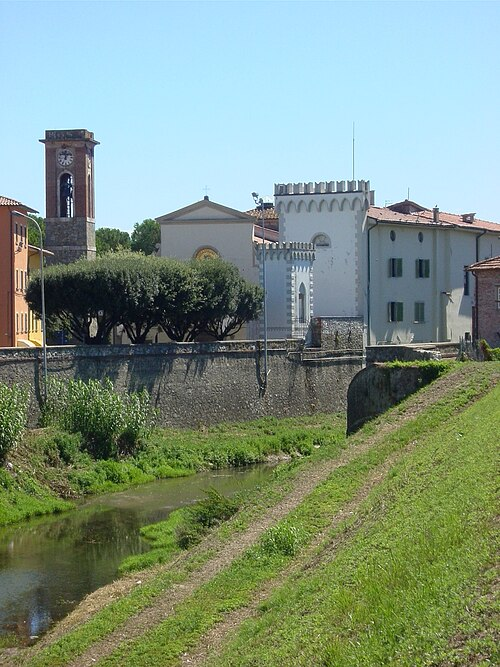
The main religious site in Ponte Buggianese is the church of San Michele Arcangelo, also known as the Sanctuary of the Madonna del Buon Consiglio. It is especially important for its cycle of sacred frescoes by Pietro Annigoni, a 20th-century artist, created with his students around the 1980s.
A key feature of the area is the Fucecchio Marsh, which represents a major attraction for nature tourism. The site offers activities such as walking, cycling, boat excursions, and birdwatching, highlighting its ecological and recreational value. The municipality also provides basic educational services, including a public library, several kindergartens, primary schools, and a lower secondary school, mostly located in the main town and nearby areas.
Among the hamlets, Albinatico is a rural area with some industrial development and a parish church dedicated to San Leopoldo, built under Leopoldo II. Anchione, near the marsh, is notable for the former Medici customs house, now a museum and documentation center, as well as its connection to the Via Francigena. Casabianca lies near major roads and the A11 motorway, with some commercial activity. Smaller settlements such as Fattoria, Ponte di Mingo, and Vione retain a mainly agricultural character, with some growth in plant nursery cultivation and local historical features.
Traditional recipes of Ponte Buggianese

We would also like to point out two dishes called “Pappardelle agli uccelli palustri” and “Risotto ai colombacci“ for which we have not been able to find the recipe. If you have recipes and would like to share it with the world, please contact us.
Source(s):
https://it.wikipedia.org/wiki/Ponte_Buggianese
Photo(s):
1. Vonvikken, Public domain, via Wikimedia Commons
2. Fluctuat, Public domain, via Wikimedia Commons