
White rice (refined rice)
Food, Plant source foods, Plants (Plantae), Flowering plats (angiospermae), Mesangiosperms, Monocots, Poales, Grasses (or Poaceae, cereals), Ehrhartoideae (Oryzoideae), Rice (Oryzeae)
Species: Oryza Sativa
Consumption area(s): Earth
Note: For better understanding, please read the article on flowering plants (angiospermae) first. If you come across unfamiliar words, you can click on any highlighted term to open the glossary with definitions of key botanical terms.
Introduction
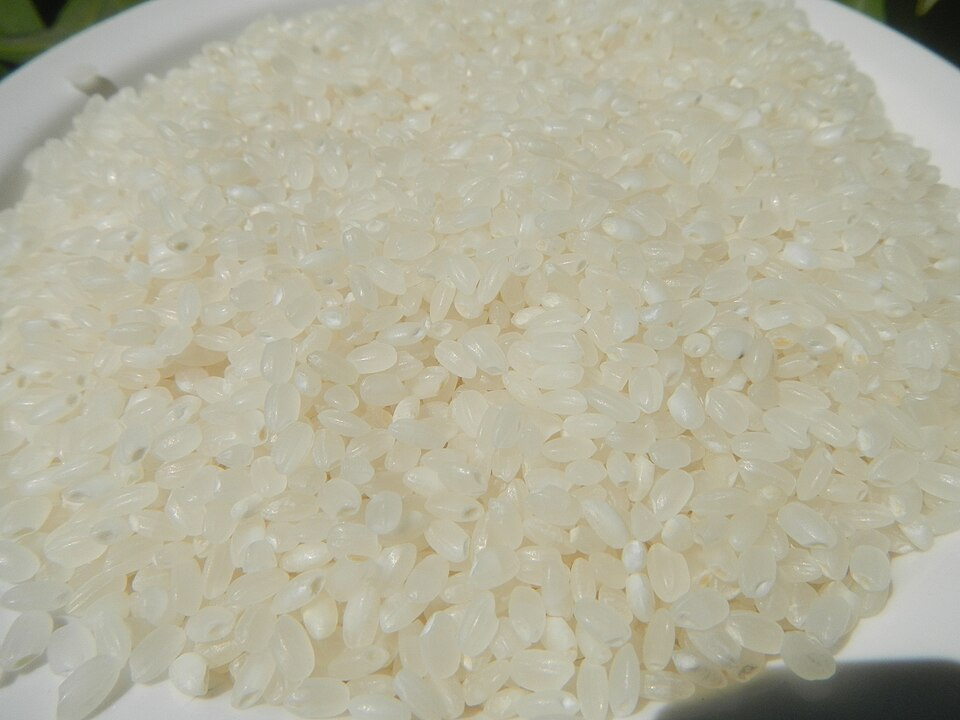
White rice (refined rice) is the most common and widely consumed form of rice worldwide. It is produced through a milling process that removes the husk, bran, and germ, leaving only the starchy inner grain. This treatment improves shelf life, making the rice less prone to rancidity, but it also results in a loss of fiber, vitamins, and minerals found in the outer layers of the grain.
Description of white rice (refined rice)
From a nutritional perspective, white rice is rich in complex carbohydrates but has a higher glycemic index than brown rice, due to the absence of fiber, which slows sugar absorption. Its soft texture and quick cooking time make it highly appreciated in many cuisines worldwide. It is also easily digestible, which is why it is often recommended in light diets or for individuals with gastrointestinal issues.
Refined rice is widely consumed globally and serves as a daily staple in many countries across Asia, Africa, Latin America, and parts of Europe. In Japan, for instance, it is eaten daily, while in Italy, refined varieties such as Arborio, Carnaroli, and Roma are traditionally used to prepare classic risotto dishes.
Production methods for white rice (refined rice)
The production process follows the same initial steps as common rice, but includes additional stages specific to refined rice. The defining procedure is milling (also called polishing or whitening), which involves passing the rice through machines equipped with concentric abrasive cones. The friction against rough surfaces removes the remaining outer layers, including glumelle remnants and the pericarp. As a result, the grains take on a pale ivory color and a firmer texture.
During this stage, imperfect or broken grains are separated using specialized devices called bonarde, which employ metal wires or cells to isolate only the uniform, intact grains. The resulting product is known as commercial or semi-processed rice—ready for consumption but not yet fully refined. At this point, the embryo is also removed, which can be processed to extract rice oil.
The final step is polishing, performed with machines similar to the milling devices but with leather-coated surfaces. This process smooths and levels the grains, producing a uniform color and glossy appearance. Only after polishing is the rice considered fully refined, ready for sorting, quality control, and packaging for commercial distribution.
Nutritional facts table
It should be noted that nutritional values may vary depending on the specific variety. The following values refer specifically to Basmati rice.
| Nutrients | Per 100 g |
| Calories (kcal) | 354 |
| Total fat (g) | 3 |
| ———Saturated fat (g) | 0 |
| Cholesterol (mg) | 0 |
| Sodium (mg) | 0 |
| Total carbohydrates (g) | 71 |
| ———Dietary fiber (g) | 2 |
| ———Total sugar (g) | 0 |
| Protein (g) | 9 |
Recipes that use this product as an ingredient:


Photo(s):
1. Judgefloro, CC0, via Wikimedia Commons