
Rutaceae
Family of Sapindales
Food, Plant source foods, Plants (Plantae), Flowering plats (angiospermae), Mesangiosperms, Eudicots, Core eudicots, Superrosids, Rosids, Malvids (Eurosids II), Sapindales
Consumption area(s): Earth
Note: For better understanding, please read the article on flowering plants (angiospermae) first. If you come across unfamiliar words, you can click on any highlighted term to open the glossary with definitions of key botanical terms.
Introduction
The Rutaceae family belongs to the group of flowering plants within the order Sapindales. It includes a broad range of species that vary considerably in structure, spanning from small herbaceous plants to shrubs and even large trees. A common feature among these plants is the structure of their flowers, which are typically divided into four or five parts and are frequently characterized by intense aromas. This distinctive fragrance is a notable trait shared across many members of the family.
From an economic perspective, the most significant genus is Citrus, which includes widely cultivated fruits such as orange, lemon, grapefruit, and lime. Other important genera include Boronia, valued for its fragrant flowers and use in essential oil production, as well as Zanthoxylum, known for species that produce Sichuan pepper.
Description of Rutaceae
Most species within the Rutaceae family are trees or shrubs, though some are herbaceous plants. Many members are aromatic, often featuring glandular structures on their leaves, and some may have spines. The leaves are typically opposite, compound, and stipule-free. Embedded within the foliage are pellucid glands, a type of oil gland, which produce the characteristic aromatic scent of the family.
The flowers generally lack bracts and can appear solitary or in inflorescence, with racemes being uncommon. They are predominantly insect-pollinated, radially symmetrical, and typically hermaphroditic. Each flower usually has four or five separate petals and sepals, and eight to ten stamens—though Citrus may have many. The stamens are often free or arranged in distinct groups, and the flowers usually feature a single stigma with two to five fused carpels. Ovaries may be separate, but the styles are fused.
The fruits of Rutaceae are highly diverse, including for exemples berries, drupes, and capsules. The number of seeds can also vary widely, reflecting the family’s remarkable morphological diversity.
Classification of Rutaceae
This family is further divided into subfamilies. Among them are:
- Amyridoideae (gum tree)
- Aurantioideae (oranges, lemons, mandarins, grapefruits)
- Cneoroideae (Cretan myrtles)
- Haplophylloideae (desert rues)
- Rutoideae (rues)
- Zanthoxyloideae (Sichuan pepper)
Photo(s):
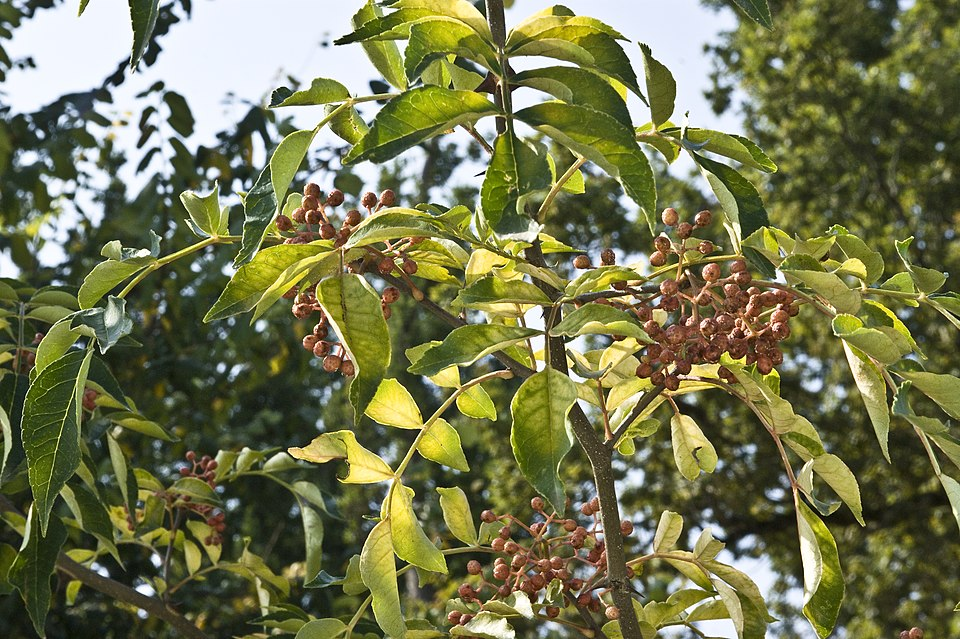
1. Didier Descouens, CC BY-SA 4.0 https://creativecommons.org/licenses/by-sa/4.0, via Wikimedia Commons