
Grapes (Vitis)
Genus of Vitaceae
Food, Plant source foods, Plants (Plantae), Flowering plats (angiospermae), Mesangiosperms, Eudicots, Core eudicots, Superrosids, Rosids, Vitaceae
Consumption area(s): Afghanistan 🇦🇫, Albania 🇦🇱, Algeria 🇩🇿, Andorra 🇦🇩, Antigua and Barbuda 🇦🇬, Argentina 🇦🇷, Armenia 🇦🇲, Australia 🇦🇺, Austria 🇦🇹, Azerbaijan 🇦🇿, Bahamas 🇧🇸, Bahrain 🇧🇭, Barbados 🇧🇧, Belgium 🇧🇪, Bosnia and Herzegovina 🇧🇦, Brazil 🇧🇷, Bulgaria 🇧🇬, Canada 🇨🇦, China 🇨🇳, Croatia 🇭🇷, Cyprus 🇨🇾, Czech Republic 🇨🇿, Denmark 🇩🇰, Egypt 🇪🇬, Estonia 🇪🇪, Finland 🇫🇮, France 🇫🇷, Georgia 🇬🇪, Germany 🇩🇪, Greece 🇬🇷, Grenada 🇬🇩, Hungary 🇭🇺, Iceland 🇮🇸, Iran 🇮🇷, Iraq 🇮🇶, Ireland 🇮🇪, Israel 🇮🇱, Italy 🇮🇹, Kazakhstan 🇰🇿, Kuwait 🇰🇼, Kyrgyzstan 🇰🇬, Latvia 🇱🇻, Libya 🇱🇾, Liechtenstein 🇱🇮, Lithuania 🇱🇹, Luxembourg 🇱🇺, Malta 🇲🇹, Moldova 🇲🇩, Monaco 🇲🇨, Mongolia 🇲🇳, Montenegro 🇲🇪, Morocco 🇲🇦, Namibia 🇳🇦, Netherlands 🇳🇱, New Zealand 🇳🇿, North Korea 🇰🇵, North Macedonia 🇲🇰, Norway 🇳🇴, Oman 🇴🇲, Peru 🇵🇪, Poland 🇵🇱, Qatar 🇶🇦, Romania 🇷🇴, Russia 🇷🇺, San Marino 🇸🇲, Saudi Arabia 🇸🇦, Serbia 🇷🇸, Seychelles 🇸🇨, Slovakia 🇸🇰, Slovenia 🇸🇮, South Korea 🇰🇷, Spain 🇪🇸, Syria 🇸🇾, United Arab Emirates 🇦🇪, United Kingdom 🇬🇧, United States of America 🇺🇸, Sweden 🇸🇪, Switzerland 🇨🇭, Tajikistan 🇹🇯, Trinidad and Tobago 🇹🇹, Tunisia 🇹🇳, Turkey 🇹🇷, Turkmenistan 🇹🇲, Ukraine 🇺🇦, Uzbekistan 🇺🇿, Vatican City 🇻🇦, Yemen 🇾🇪
Note: For better understanding, please read the article on flowering plants (angiospermae) first. If you come across unfamiliar words, you can click on any highlighted term to open the glossary with definitions of key botanical terms.
Introduction
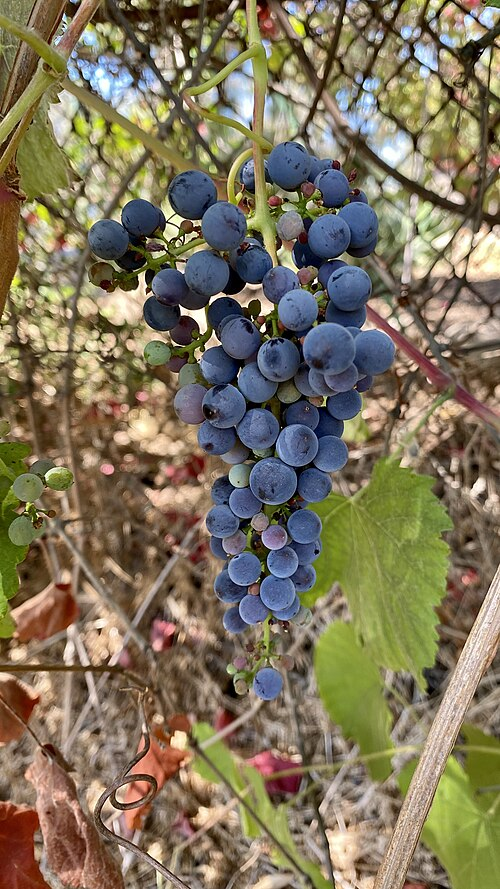
Grapes (Vitis) constitute a genus a genus of roughly 80 plant species belonging to the Vitaceae family. These plants primarily originate from the Northern Hemisphere and holds significant economic value because it provides grapes, which are used both as fresh fruit and in the production of wine through fermentation. The systematic cultivation, care, and management of these plants are referred to as viticulture, a practice central to the agricultural and commercial use of grapes.
Description of the plant
Most cultivated Vitis varieties have hermaphroditic flowers, containing both male and female reproductive organs, whereas wild species are generally dioecious. These tiny flowers form clusters called inflorescences, and when pollinated, each flower develops into a grape berry, creating a cluster of fruit. The berries are often large, colorful, and sweet, which helps attract birds and animals to disperse their seeds. Flower buds develop late in the growing season and overwinter, blooming in the following spring.
Grapevines typically bear fruit only on shoots from buds formed the previous season. In viticulture, this principle informs pruning practices, where older wood is trimmed to retain either canes with 8–15 buds or smaller spurs with 2–3 buds, ensuring productive growth in the next season. The flowers are pentamerous, with petals fused at the tip forming a calyptra that falls as a unit, and the fruit is an ovoid berry with a two-celled ovary usually producing four seeds per flower.
Other important vine structures include tendrils, which are leaf-opposed and branched in some species like Vitis vinifera, allowing the plant to climb by wrapping around supports or trellises. Most species inhabit temperate regions of the Northern Hemisphere, particularly North America and eastern Asia, though some exist in the tropics. Vitis vinifera, the main wine grape, originated in Southern Europe and southwestern Asia.
Mature vines can reach up to 48 cm in diameter and climb into the upper canopy of tall trees. Many Vitis species are closely related, allowing interspecific hybrids that are usually fertile and vigorous, blurring strict species boundaries and highlighting the adaptation of different cultivar to their environments.
Globally, about 71% of grapes are used for wine production, 27% for fresh consumption, and 2% for dried fruit. Some grapes are processed into juice, which serves as a natural sweetener in canned fruits labeled “no added sugar” or “100% natural.”
Description of the edible part (grapes)
The grape cluster represents an infructescence a compact aggregation of fruits. This structure consists of a central framework known as the rachis, from which numerous berries—also termed grapes—are attached. These small fruits vary in colour, appearing pale (greenish-yellow to golden) in white cultivars, or darkly pigmented (pink, purple, or bluish-violet) in red cultivars.
The rachis acts as the main supporting axis, branching into secondary stems and subsequently into pedicels that initially bear the flowers and later sustain the developing berries. In most cases, pigmentation is confined to a cellular layer of the epicarp, while the internal parts accumulate little or no colour. However, certain cultivars of Vitis vinifera subsp. sativa, display pigmented pulp in addition to a coloured skin.
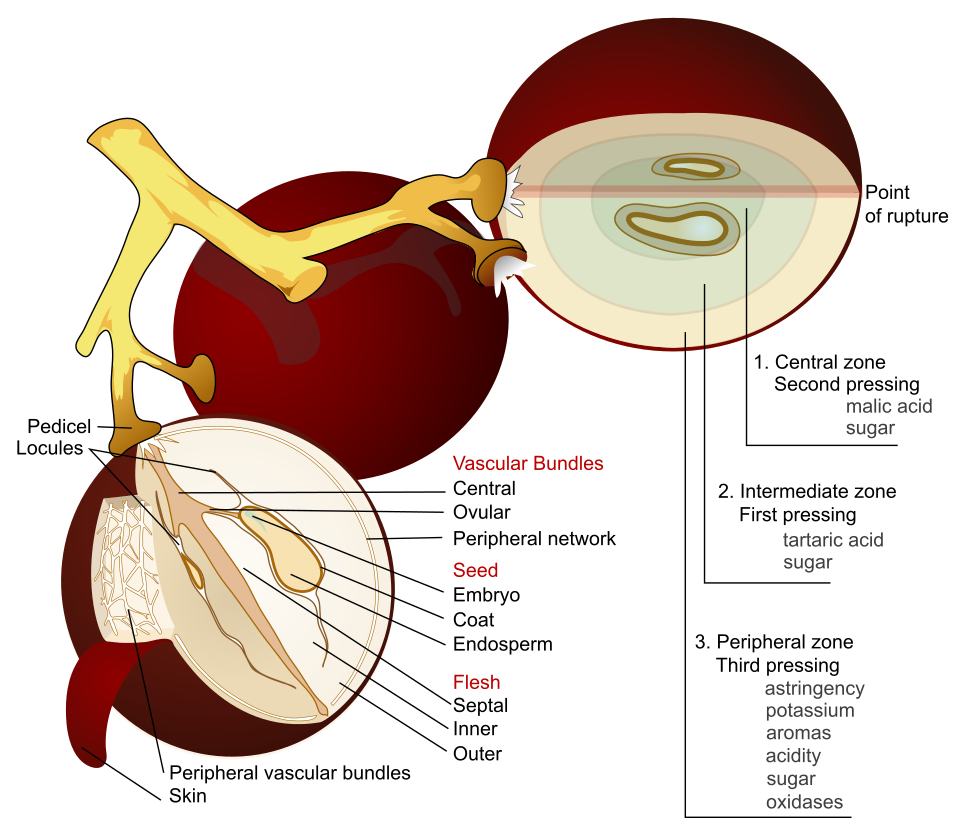
Within each berry are found the seeds, typically pear-shaped and numbering up to four, though more commonly one or two are present. Seedless grapes are also widely cultivated; they are particularly valued for fresh consumption and are frequently used in the production of dried sultanas, where the absence of seeds is desirable.
History of grapes (Vitis) as food
The Middle East is widely regarded as the original centre of grape domestication, where the cultivation of the grapevine is believed to have begun roughly 6,000–8,000 years ago. Naturally occurring yeasts present on the berry skins likely facilitated the early accidental fermentation of grape juice, leading to the emergence of wine as one of the first alcoholic beverages. Archaeological findings indicate that winemaking already held a significant cultural role about 8,000 years ago, particularly in regions corresponding to modern-day Georgia.
One of the most ancient known wine production sites, the Areni-1 winery in Armenia, dates to approximately 4000 BC. Centuries later, by the 9th century AD, the Persian city of Shiraz had gained renown for producing high-quality wines, and it has been suggested that the name of the Syrah grape may derive from this historical association. Evidence from Ancient Egyptian hieroglyphs and classical historical accounts also confirms that purple grape cultivation was practiced by civilizations such as the Greeks, Cypriots, Phoenicians, and Romans, contributing to the gradual diffusion of viticulture throughout Europe, North Africa, and eventually the American continent.
Further discoveries have shed light on the antiquity of Mediterranean winemaking traditions. Archaeologists identified Chalcolithic wine vessels in Cyprus, originally unearthed in the early twentieth century, that were later dated to around 3500 BC, making them among the oldest known containers associated with wine. The renowned Cypriot dessert wine Commandaria is considered one of the earliest continuously produced wines, with origins traced back to nearly 2000 BC.
Across North America, numerous wild grape species belonging to the genus Vitis grew abundantly and formed part of the dietary resources of many Indigenous communities. Early European settlers, however, often judged these native grapes unsuitable for traditional winemaking. In the nineteenth century, horticulturist Ephraim Bull selectively bred seeds from wild Vitis labrusca vines in Massachusetts, ultimately developing the Concord grape, which later became a prominent agricultural cultivar in the United States.
Uses of grapes (Vitis)
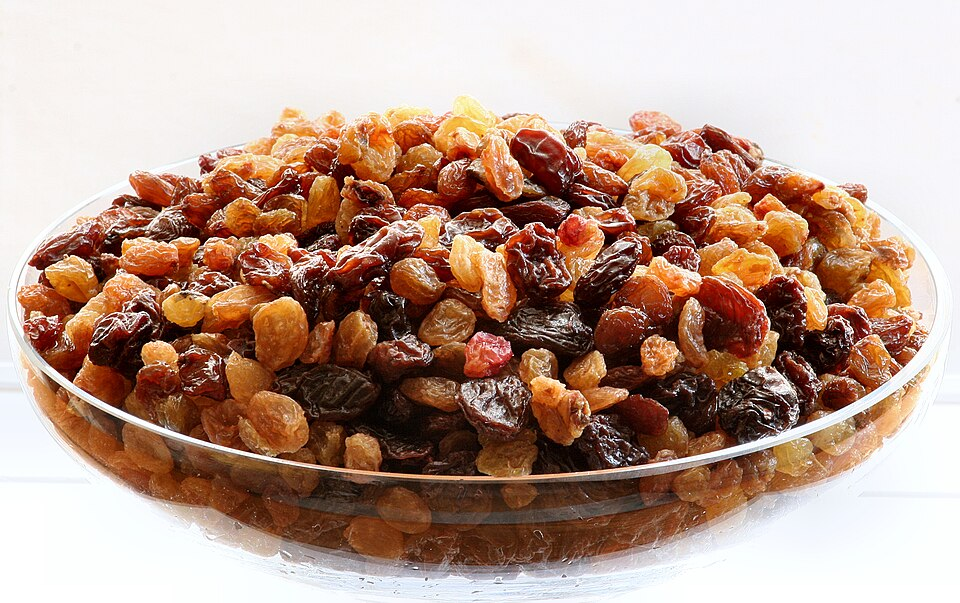
Grapes are enjoyed in various forms, including fresh, dried—as in raisins, currants, and sultanas—or cooked. Depending on the cultivar, they are also a fundamental component in wine production. Beyond direct consumption, grapes can be transformed into a wide array of products such as jams, juices, vinegars, and oils. Commercially, grapes are generally categorized into table grapes or wine grapes, based on their intended use: table grapes are eaten raw, whereas wine grapes are cultivated specifically for fermentation.
Table grape varieties typically feature large, seedless fruit with thin skins, while wine grapes are usually smaller, often contain seeds, and have thicker skins, which are essential for developing the wine’s aroma. Wine grapes also tend to have higher sugar content, harvested when sugar levels peak, around 24% by weight. In contrast, commercially produced 100% grape juice from table grapes usually contains about 15% sugar.
In most of Europe and North America, raisins are commonly called sultanas or by local equivalents. However, in Britain and Ireland, three distinct types are recognized, prompting the EU to refer to them in official documents as “vine dried fruit.” Any grape that has been dried qualifies as a raisin. The term “raisin” comes from French, though in French it denotes fresh grapes; “grappe” refers to the cluster.
Grape juice is produced by crushing and blending grapes into a liquid. It can be sold as-is or fermented into wine, brandy, or vinegar. Pasteurized grape juice, which removes natural yeasts, does not ferment if kept sterile, thus remaining alcohol-free. In winemaking, juice containing 7–23% pulp, skins, stems, and seeds is referred to as must.
Vinegars like husrum or verjuice originate from acidic grapes in the Middle East. The process involves crushing unripe grapes, collecting and salting the juice, simmering to remove foam, and preserving it under a layer of olive oil to prevent contamination and oxidation. Historical records, such as a 12th-century document from the Cairo Geniza, mention unripe husrum grapes from Ashkelon, Egypt. In Iran, a vinegar made from sour grapes is traditionally used in Shirazi salad.
Classification of grapes (Vitis)
This genus is in turn divided into species. Among these we find:
- Common grapes (European grapes)
- Fox grapes
- Frost grapes
- Muscat grapes
- Riverbank grapes
- Summer grapes
Instead, from a culinary and oenological point of view, grapes are mainly classified according to their colour. We therefore find:
- Black (red) grapes
- White grapes
Regardless of colour, grapes are also classified according to their intended use. Thus, a distinction is made between:
- Table grapes
- Wine grapes
It should also be noted that there are many grape-derived products, including:
- Wine
- Wine vinegar
Photo(s):
1. Jengod, CC BY-SA 4.0 https://creativecommons.org/licenses/by-sa/4.0, via Wikimedia Commons
2. See page for author, CC BY-SA 4.0 https://creativecommons.org/licenses/by-sa/4.0, via Wikimedia Commons
3. Paweł Kuźniar (Jojo_1, Jojo), CC BY-SA 3.0 http://creativecommons.org/licenses/by-sa/3.0/, via Wikimedia Commons