
Plants (Plantae)
Kingdom
Consumption area(s): Earth
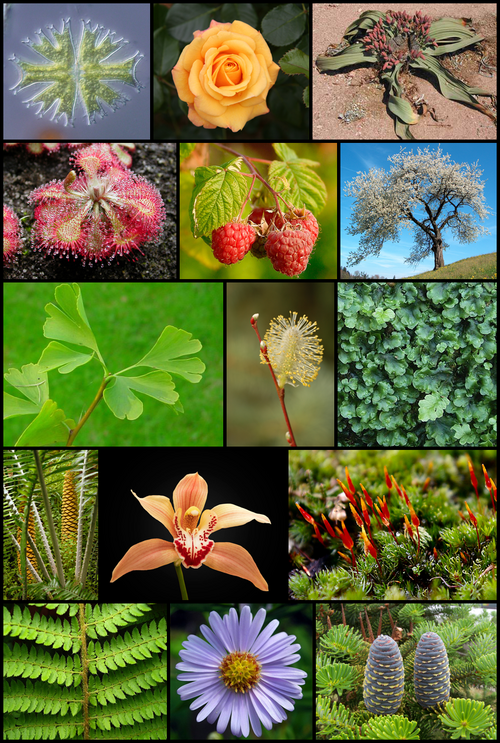
Introduction
Plants (Plantae) represent a vast group of living organisms that may exist as unicellular or multicellular forms. They are eukaryotic beings that typically perform photo-aerobic metabolism, relying on photosynthesis to produce energy. A defining biological trait is the presence of chloroplasts, cellular structures enabling the conversion of light energy into chemical energy.
Current scientific records recognize approximately 386,654 described plant species, reflecting the enormous diversity of this kingdom. This assemblage includes a wide spectrum of growth forms and life strategies, ranging from towering trees and shrubs to soft-stemmed herbaceous plants, flexible climbers, water-storing succulents, ancient ferns, and simple mosses.
Description of plants (Plantae)
Plants possess several fundamental features that define them in biology. They are made of eukaryotic cells, meaning highly complex cells with a membrane-bound nucleus. These organisms are autotrophic, using chlorophyll-based photosynthesis to capture solar energy and convert carbon dioxide into sugars and oxygen. Their cell walls are primarily composed of cellulose, and their cells can store energy.
Most plants are multicellular, with cells specialized into a variety of cell types, forming tissues like the vascular tissue with xylem and phloem, and organs with specific roles. Roots absorb water and minerals, stems provide support and transport nutrients and water, leaves conduct photosynthesis, and flowers are involved in reproduction.
Plants perform photosynthesis, creating sugars using light energy captured by chlorophyll in their chloroplasts. The process releases oxygen into the atmosphere, with green plants and algae contributing significantly to the planet’s oxygen supply. Some plants that evolved a parasitic lifestyle have lost genes for photosynthesis and chlorophyll production.
Plants reproduce both sexually and asexually, often using both methods. Sexual reproduction involves complex life cycles with alternating generations: the diploid sporophyte produces the haploid gametophyte. Non-flowering plants like mosses are mostly visible as gametophytes, whereas seed plants are mostly sporophytes, with small gametophytes. Angiosperms reproduce sexually via flowers containing male and female parts. Pollen carries male gametes to the ovule, where fertilization occurs inside the carpel, developing into a fruit with seeds. Fruits can be dispersed whole or release seeds individually.
Asexual reproduction occurs when plants grow from various structures capable of forming new individuals. Mosses, and flowering plants can fragment, with each part regenerating into a full plant. Cuttings and stolons allow flowering plants to form clones and cover areas. Storage part of plants like tubers and bulbs can also develop into new plants. Some non-flowering plants and certain flowering species produce small cell clusters that detach and grow into new plants.
Classification of plants (Plantae)
Plants are primarily classified into phyla, including:
- Coniferophyta (fir needles, juniper berries, pine needles, pine nuts)
- Cycadophyta (cycad nuts)
- Flowering plants (or Angiosperms, Magnoliophyta) (all other edible plants)
- Ginkgophyta (ginkgo seeds)
- Gnetophyta (gnetum, welwitschia)
- Polypodiophyta (ferns)
Source(s):
https://it.wikipedia.org/wiki/Plantae
Photo(s):
1. Rkitko, CC BY-SA 4.0 https://creativecommons.org/licenses/by-sa/4.0, via Wikimedia Commons